
Microscopy Solutions / Image Analysis and Machine Learning
Sample holder for efficient image capture
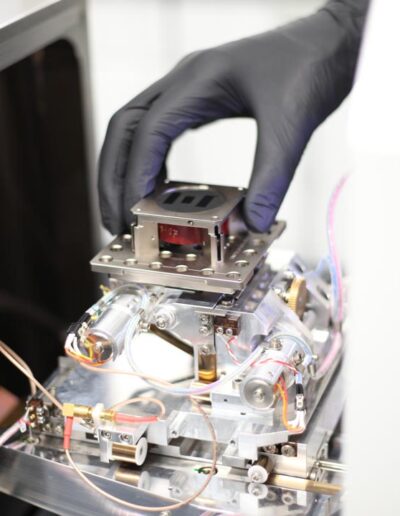
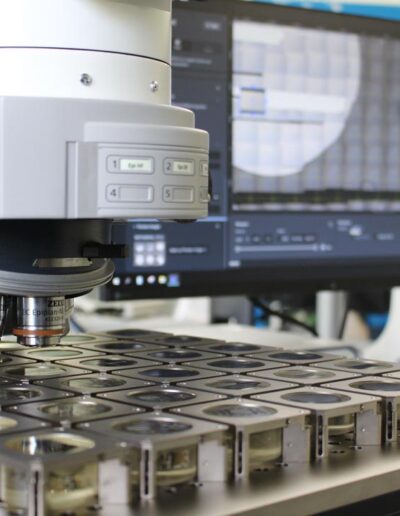
Sample holders for scanning electron microscopy and
for highly efficient imaging in light microscopy
Our sample holders feature a flexible, modular design and can be easily adapted to different sample geometries. Microscopes from other manufacturers can also be integrated upon request.
GxP-compliant software solutions as a business partner of ZEISS Microscopy
Support for GxP-compliant validation solutions for microscopy.
The analysis workflows are developed according to the V-Model, which optimally supports the requirements of the regulated environment and ensures the highest level of security and transparency.
Materials Engineering Issues
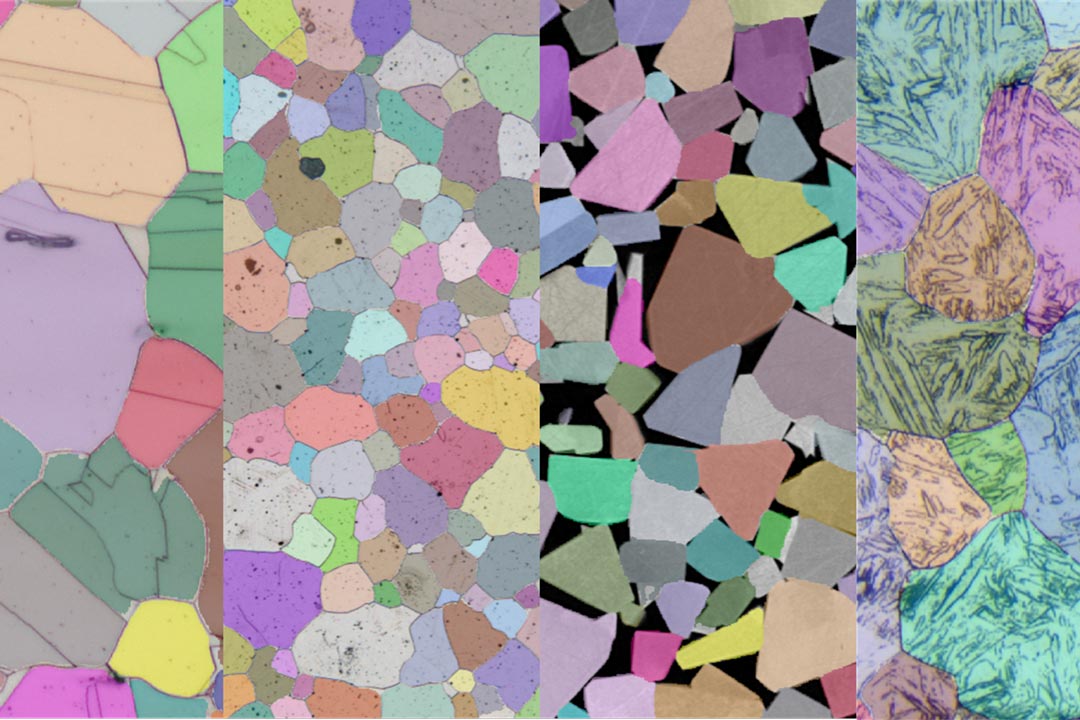
Machine learning-based grain size analysis for various materials.
We offer fully automated, AI-powered quality assurance and material characterization, ranging from residual analysis with VDA 19-compliant reporting to advanced quantitative microstructural analyses. Integrated calibration ensures measurement accuracy, while large-area, high-throughput analyses efficiently capture process effects, microstructural homogeneity, and pore distributions across multiple samples. Using a “tiling” approach, we offer field- and region-specific analyses, including the visualization of larger defects, fine geometric evaluations, and grain size determination.
AI-powered workflows encompass semi-automated measurements of geometric parameters and the automated quantification of microstructural features such as grains, phases, or defects, which can be integrated into SQL databases to enable reproducible data management, supported by the automated generation of custom reports to assist with audits. By combining AI, automation, high-throughput analysis, and data-driven analytics, our solutions deliver highly accurate, reproducible insights that accelerate quality assurance, process optimization, and materials research for a variety of materials.
Machine Learning and Data-Driven Solutions in Practice
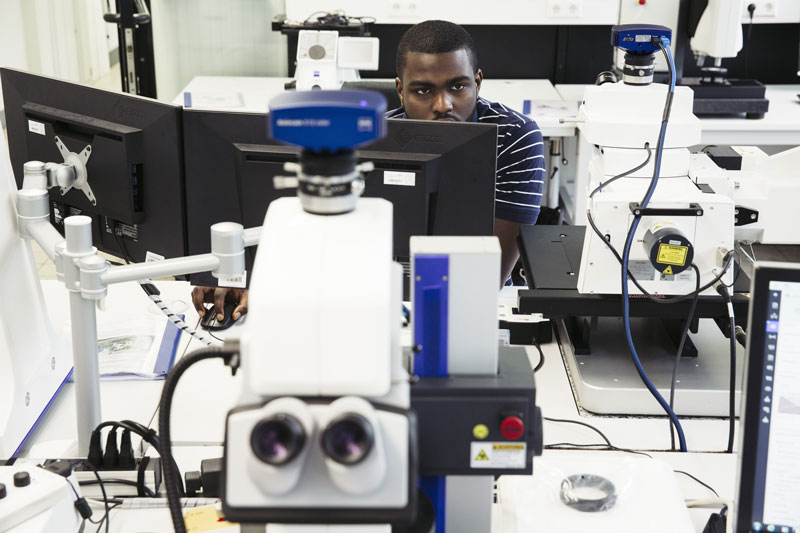
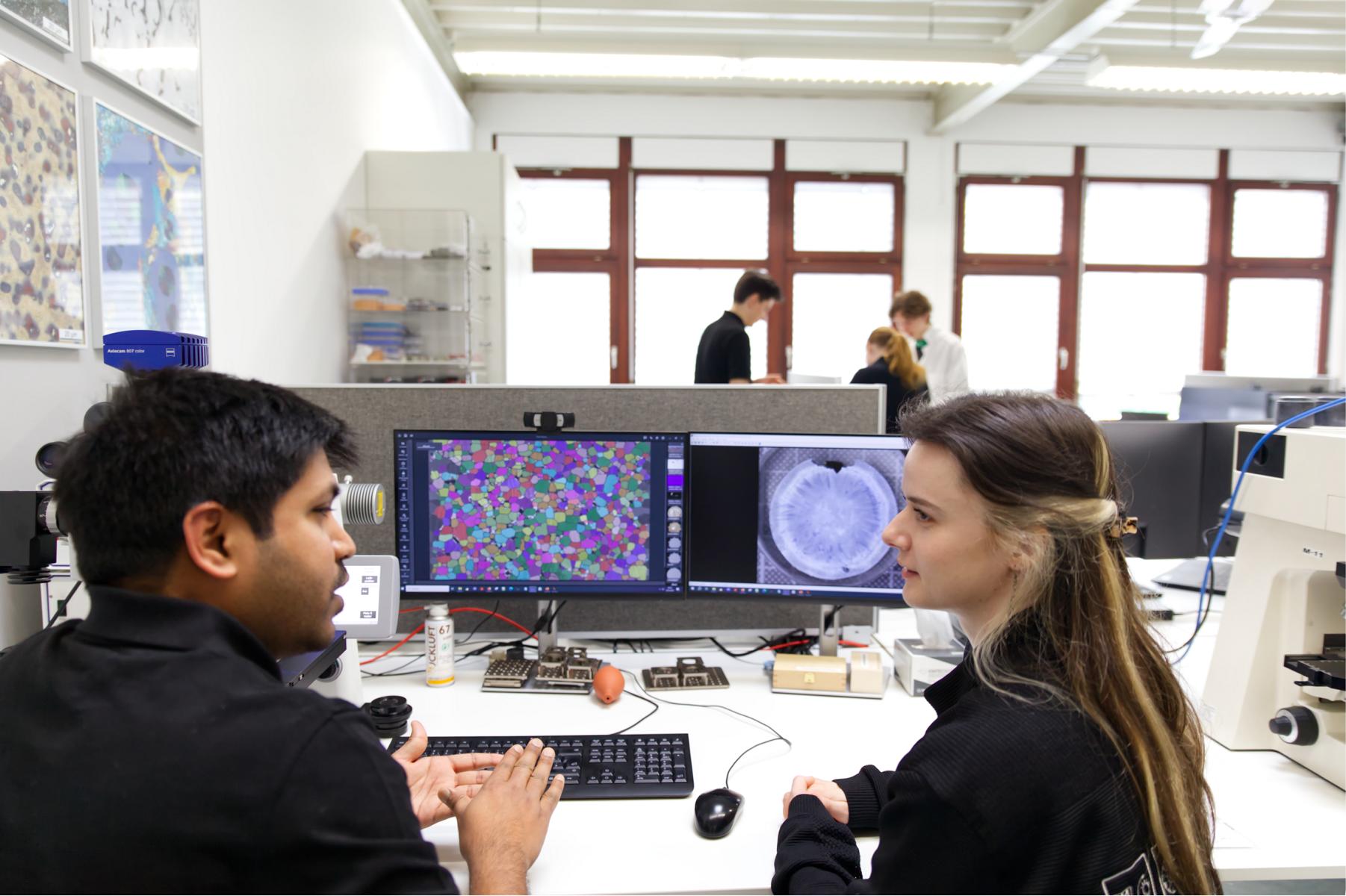
Automation solutions in microscopy with AI support.
Photographer/Image source: Sven Doering
Our laboratory combines automated microscopy with AI-assisted materials analysis to deliver fast, accurate, and quantitative insights from microstructures. We train powerful machine learning and deep learning models for defect detection, structure classification, property correlations, and microstructure quantification using frameworks such as TensorFlow, Keras, PyTorch, OpenCV, and scikit-learn. Feasibility studies are carried out using both existing datasets and newly acquired samples.
Our AI pipelines emphasize reproducibility and compliance through custom model exports and standardized AI system classification and validation. We ensure transparency through detailed model and data cards documenting architecture and limitations, while integrated data drift monitoring helps maintain accuracy over time and ensures reliability, robustness, and audit readiness.